didn't make much sense, did that? while i don't always agree with Laurie Fendrich's posts in Brainstorm, but her "Aristotle was Right" (June 12) made more sense to me than a lot of other things i've read lately (in general). as someone who lost a parent at a young age, i've pondered the last few years the fact that i could only know that parent through the eyes of a (very young) child, and so i have conflicting views of what my deceased parent was actually like—my own ideas mixed with things i've heard from relatives and close friends. i've had to accept the fact that i will never know what this crucial person in my life was really like—not even very much at all.
my living parent is one of those parents who totes the "proud parent" type of bumper stickers on their car, and has been for some time. i've reasoned that part of this is the fact that i am what remains of my deceased parent; from pictures i've seen to the stories i've heard from others, i'm apparently quite like that parent in many ways (disposition, appearance, sense of humor, and so on). but, like Fendrich, something has always bothered me about my living parent's willingness to essentially brag about me when my accomplishments have mostly been my own, with little actual involvement in them besides providing food, shelter, and clothing (for which i am grateful). i sometimes wonder if that parent would talk so much about me were i not "such a good kid," had struggled significantly in school, and well... done other things kids my age were doing (the loss of a parent, in my case, resulted in accelerated maturity and self-sufficience).
hypotheticals aside, it's all very frustrating when there are plenty of wonderful people who may not (have) be(en) "good kids" in their parents' eyes for one perceived shortcoming or another.


6.10.2008
reverential, or just cute?

i came across this [The tiny Chihuahua who thinks he's a Buddhist Monk, Mar. 24] after having seen this loldog macro using the other picture from the article... pretty cute, even though no one can really be sure if this chihuahua is actually praying or just immitating the monks.
re-evaluating the goals and needs of higher ed
the Chronicle.com News Blog has a small piece called Conference Examines National Purposes of American Higher Education (June 9), detailing some of the issues facing higher education institutions' as the nation's economy and higher-education-seeking population demographics are changing.
i hope to see the report when it comes out, but i also wonder why it seems so much easier to identify changes that need to be made, and work towards changing them, at institutions of higher learning when the fundamental places of learning—K through 12 systems—need improvements which would no doubt decrease the number of changes higher education institutions need to make (i can think of a variety of answers to this question, including: uneven spending, taxpayer upset, insufficient resources, administrative hurdles, etc.).
the statement from Gordon Davies, former director of the State Council of Higher Education for Virginia, that "while the group had articulated a set of national purposes for higher education, most solutions for improving policies must be developed locally," brings some comfort, though, in its seeming goal for recognizing there is not one way to change the institutions that would meet all their respective needs, and home-grown autonomy that all communities in need of change should be recognized as requiring.
6.09.2008
thoughts on growing up from a rising college senior
first off: do i have to?
i think i'll always be trying to make myself enjoy things more and just have fun — since i've almost always had a problem doing so, having been forced into maturity at an early age due to a family illness and loss. fortunately, i now have friends that help me with that — and are good at helping me do so in ways where i actually have fun. it's nice. this semester was probably the best i've had; the year overall probably was, too.
however, right now, the impending sense of having to "grow up" and be an "adult" is freaking me out, to be blunt. i'm now a senior, so i'll be graduating next spring, and though i have a possible job lined up, there's no guarantee i'll get it. i'm almost on my own, and i have very little wealth to my own name. (my current job situation is a mess, but i'm working on getting a new one.)
i'm about to move to a new place, off-campus, for at least the next two years, but perhaps longer, with a few housemates. i don't have any furniture for it yet, and given my financial situation, i will probably only have enough for a decent bed for a while (even that's if-y). i know i'll make do, and probably get crafty for some cheap alternatives to basic furniture, but it's still just a tad unnerving to be almost completely on my own without much means to support myself.
i know i'll be okay. it's me. i do that. but i'm still feeling like nothing is certain right now, and even though nothing is ever certain, what little sense of self-originating security i had is leaving me.
emoticons in homework assignments? really?
i came across this piece ["Students Use Emoticons In Homework and Teachers are ... >:-O", April 24] in the Campus Progress Newswire a little while ago. i'm not entirely surprised young people are doing this (those who have access to computers and text messaging plans, anyway), and i'm sure my grammatical style may seem online-esque to many readers (i assure you, the lack of capitalization has a purpose - it's not because of the convience of not having to hit the 'shift' key, and i still slip up and will capitalize things sometimes out of habit).
i hope situations in which students are using emoticons in assignments will be used as 'teachable moments' about formal vs. informal writing styles, as the piece suggests. but i feel like it should have already been addressed as something informal, and therefore inappropriate, in most composition classes... just seems kind of odd to me that students wouldn't have been taught the skills to realize such a simple thing in the first place. however, it does seem like an organic sort of problem coming from the influence of technology in our culture, so it wouldn't have been explicitly addressed in a composition course which is not reflective of modern technologies (even if it uses them—such as when students perhaps have to type up their papers instead of hand-writing them).
...it's certainly going to be interesting to be a high school teacher in the coming years.
6.07.2008
the comic is a hint, too.
 Brini Maxwell's alt.NPR podcast series, "Hints for Gracious Living," is one of my all-time favorites: not only is it helpful, but Maxwell — a Martha Stewart/Donna Reed drag persona (could it get any better?!) — delivers the information in a sarcastic-yet-positive tone. each episode is only about three or four minutes long, so it's easy to process the content Maxwell provides. on Maxwell's site — brinimaxwell.com — one can find links to the podcast, as well as videocasts of her (sadly) now defunct television program, and other treats.
having just re-subscribed to my favorite podcasts and some new ones (which i will probably review in future posts) after losing my previous laptop (R.I.P. "New Dellhi" [sic]),
 i happened to find the recent episode of Maxwell's, "Life without Furniture (#94)" (which can be found through this page, i'm pretty sure), in which she options for creating comfortable living environments without furniture. considering i am the quintessential poor college student, i might be making use of some of her helpful hints when i move into my new place in August.
this sums up my feelings on the matter.
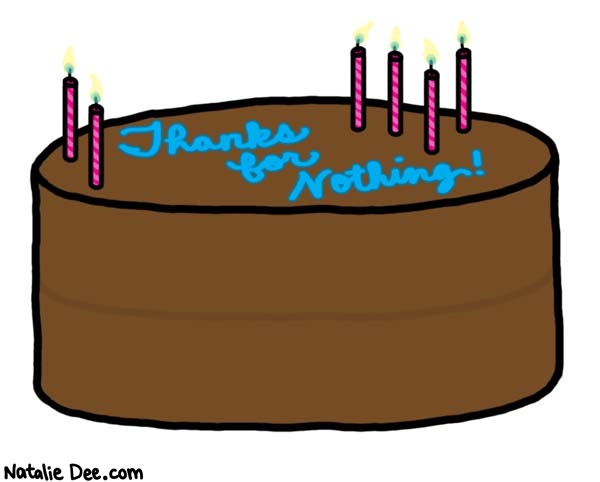
...what matter that is, i'd rather not say (no need to worry, i'll be fine — really). just trust me when i say this cake knows what's up.
when will it stop? some thoughts on the recent incidents of hate against Sikh students in NY
i have been a member of The Sikh Coalition's listserv since last summer, when there was action being organized against discriminatory practices in TSA guidelines for airport security checkpoints, finding these procedures insensitive and disrespectful. within the last month alone, there have been many incidents of hate in New York schools against Sikh students. just yesterday, i got this newsletter alert (click either link below for the full article):
it's moments like these that make me question the standards for K-12 educators and adminstrators. and often times, from my experience, i've found it's not necessarily an unwillingness on their part to remedy social issues within the school — as in the article above, actions were being taken to look into the issue, but one may wonder if that would have happened without The Sikh Coalition stepping in. of course, a thorough knowledge of youth development models, pedagogical techniques, and one's subject matter are important. however, in today's schools in the US, it is increasingly important that educators and administrators are conciously working towards cultural competency and social justice for their students.
the over-arching concern i have from the worries mentioned above is that i am an undergraduate, pre-service teacher; i feel as though i shouldn't have to say what i just did. to me, it should be common sense to certified educators. even though there has been little representation in established research about incidents of hate on developing adolescents which is taught to pre-service teachers (like myself), they no doubt negatively affect both the students' sense of self, and their learning. and from there, these issues need to be addressed — in schools — with the sensitivity they deserve.
all this brings to my mind what Jeanni Oakes writes in Teaching to Change the World:
i'm glad that there are organizations like The Sikh Coalition that are willing and prepared to step in during situations like this. however, it worries me that there was no initial effort at reducing these sorts of incidents in schools, given the misguided post-9/11 backlash at anyone remotely Middle Eastern-looking to ignorant eyes, especially considering this was in New York, and in the city. it worries me even more that there were documented incidents before this one happened, and there was hardly anything done about the perpetrator (so it seems from the report), and that both teachers and the administration did not seem to understand how serious this (repeated) problem is. these sort of ignorant, hateful acts should not have happened in the first place - but should most definitely not have happened repeatedly.Another Sikh Boy Suffers Hate Assault in New York City School
School Has a History of Anti-Sikh Violence
(New York, NY) June 5, 2008 - New York City's Sikh community has again suffered the indignity of another hate crime against a Sikh student. This past Tuesday (June 4, 2008), Jagmohan Singh Premi, a student at Richmond Hill High School, was punched in the face after a student intentionally attempted to remove his patka (smaller turban). The perpetrator has a long, documented history of harassing Jagmohan in school, making fun of his patka and beard, and attempting to pull off his patka.
[via The Sikh Coalition]
it's moments like these that make me question the standards for K-12 educators and adminstrators. and often times, from my experience, i've found it's not necessarily an unwillingness on their part to remedy social issues within the school — as in the article above, actions were being taken to look into the issue, but one may wonder if that would have happened without The Sikh Coalition stepping in. of course, a thorough knowledge of youth development models, pedagogical techniques, and one's subject matter are important. however, in today's schools in the US, it is increasingly important that educators and administrators are conciously working towards cultural competency and social justice for their students.
the over-arching concern i have from the worries mentioned above is that i am an undergraduate, pre-service teacher; i feel as though i shouldn't have to say what i just did. to me, it should be common sense to certified educators. even though there has been little representation in established research about incidents of hate on developing adolescents which is taught to pre-service teachers (like myself), they no doubt negatively affect both the students' sense of self, and their learning. and from there, these issues need to be addressed — in schools — with the sensitivity they deserve.
all this brings to my mind what Jeanni Oakes writes in Teaching to Change the World:
[Educators who work towards social justice] differ from Americans who look longingly to a mostly imagined past, when the 'good' life meant one without diversity, a life lived with people mostly like 'us.' In this sense us has typically meant those at the center of society—a location that is white and middle class, with males in authority and women and children safely protected in heterosexual families. [These socially just educators] also differ from some of their colleagues who are intent on returning to an imagined 'good' past when children all spoke English and scored above average, and their parents only came to school to deliver cookies. The social justice these ... teachers envision does not try to re-create the past. The know they must wrestle with traditions in schools and society that will obstruct their efforts and attempt to persuade them that their idealism is naive or destructive. (28-29)if we don't start teaching the teachers how to deal with these issues in a way that has a positive learning outcome for students (both those who are victimized and the perpetrators), how are we ever going to teach the students to do so?
Gmail releases Lab features
most people know I'm a huge fan of Gmail and other Google products — perhaps too big a fan. but for any Gmail users reading this, i highly recommend checking out this post at Lifehacker that can show you how to enable a bunch of experimental features (with links to other posts with more details about them). so far, i've found some of them quite helpful, specifically the addition of more icons instead of just the little yellow star, called "Superstars."
enjoy!
introductory post
i've decided that i want to start a blog i can actually keep up with. for that reason, i picked a mix of subjects which interest me most: social issues, education, technology, stuff that happens to me, and where they overlap, either elegantly, or not. i'm hoping that from this, i can better develop my writing skills, and perhaps gain insights only active reflection can bring.
some things anyone reading this should know:
some things anyone reading this should know:
- i'm young; an "echo-boomer" undergraduate student. that should give readers a little bit of context in terms of where i'm coming from generationally/educationally.
- i'm progressively-minded; i err on the side of liberalism in most respects. i'm open to other viewpoints, but to me, being progressive means being inclusive of other viewpoints, and i've often found that more conversative/traditionalist viewpoints are not inclusive of others. inclusivity is value i hold very highly.
- this blog will not always be in English. if this makes you uncomfortable, good — we usually learn from discomfort, because that means we're getting shaken up and having to re-evaluate our ideas about the world. more often than not, anything not in English will be in Spanish or Spanglish. sometimes, there may be a word or two from another language where there is no good translation, though i'll try to provide explanations.
- the grammar i follow obviously does not follow formal standard grammatical conventions. i prefer not to capitalize "i" or my name as an attempt at a humbling gesture, and do not capitalize the beginning of sentences, because anyone reading what i write - in English or Spanish - should realize where the beginning of the sentence is. i will pay respect to others' by capitalizing their names, as well as other proper nouns (the ones i feel are deserving, anyway).
- i try to have a sense of humor about things, and don't find myself particularly more special than anyone else — though, there are those who swear i am (my boyfriend, for instance). i like laughing. i try not to take things — or myself — too seriously, but certain things (like human rights violations — come on!), i do. that being said, most people know i have a crippling addiction to lolcats, and i do enjoy the occasional webcomic. consider yourself warned.
is there anything you would like to see from this blog? specific questions or issues addressed? let me know. just send a line to cj.blogs[at]gmail[dot]com. thanks!
Subscribe to:
Posts (Atom)


 Posts


